
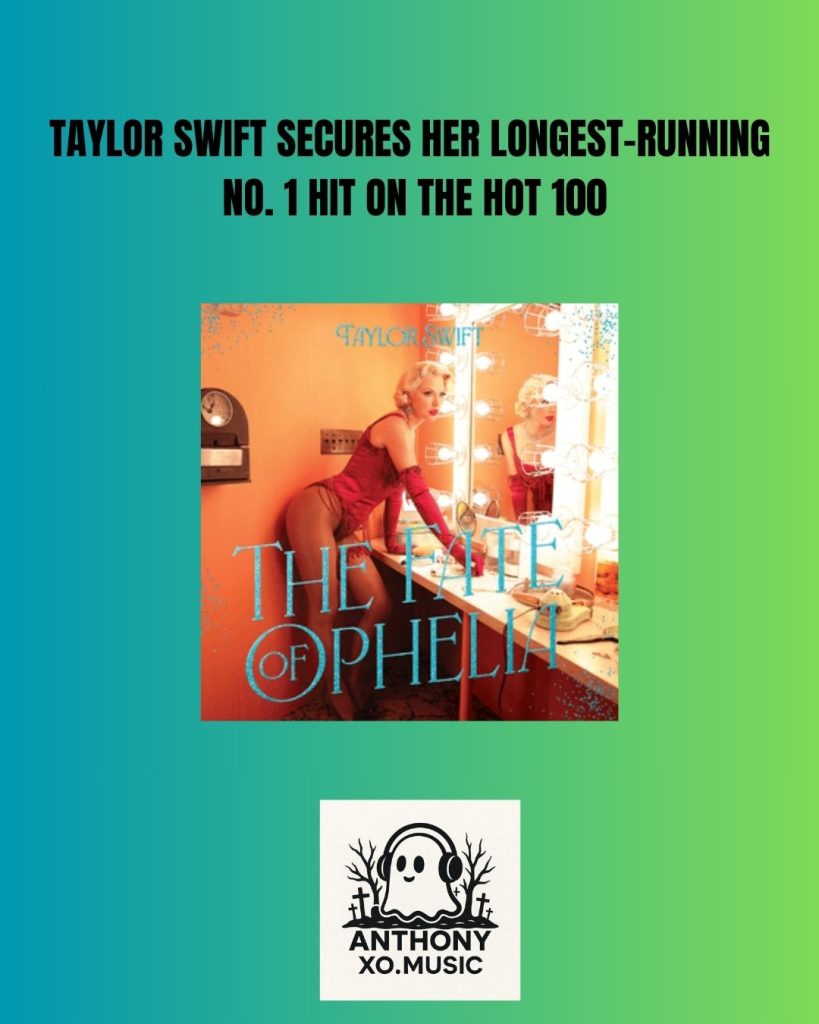
Taylor Swift has added another major milestone to her already historic chart career. Her latest single, “The Fate of Ophelia,” officially became the longest-running No. 1 hit of her career this week on the Billboard Hot 100, surpassing the chart runs of her previous chart-topping singles.
The achievement further reinforces Swift’s dominance in the modern music industry, especially in an era where maintaining long-term chart stability has become increasingly difficult due to the speed of streaming culture and constant release cycles. While many songs debut high and quickly decline, “The Fate of Ophelia” has shown unusually strong staying power across multiple platforms.
According to Billboard, the song continues to perform exceptionally well in streaming, radio airplay, and digital engagement weeks after release. The track has remained highly active across Spotify and Apple Music playlists while also maintaining strong listener retention on social media platforms such as TikTok and Instagram Reels, where fans continue using the song in emotional edits and trend-driven content.
Part of the song’s success comes from its emotional presentation and cinematic songwriting approach, which many listeners have compared to some of Swift’s most introspective material from previous eras. The combination of vulnerable lyricism, melodic accessibility, and replay value has allowed the track to resonate with both longtime fans and casual listeners.
The record-breaking chart run also highlights Swift’s rare ability to evolve commercially across multiple generations of pop music. From country beginnings to stadium-level pop dominance, her catalog continues to adapt without losing mainstream relevance. Very few artists in modern history have maintained this level of sustained commercial momentum over such a long period.
With “The Fate of Ophelia” now standing as the longest-running No. 1 hit of her career, Swift once again proves why she remains one of the defining artists of the streaming era. The milestone adds yet another chapter to a chart legacy that already ranks among the most dominant in pop history.
Source: Billboard