Best Albums of 2026 So Far
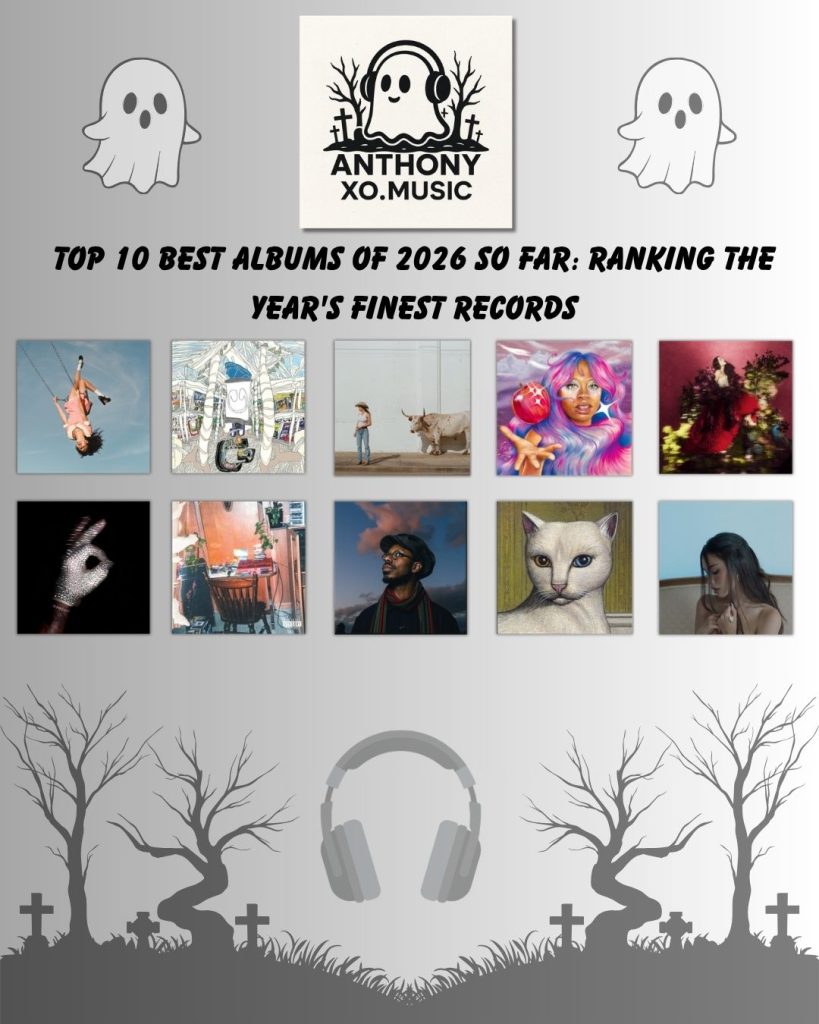
We’ve officially crossed the midway point of 2026, and the musical landscape has let out a collective exhale. The TikTok-bait era of algorithmic desperation finally feels like it’s losing its grip, replaced by something that actually resembles artistic endurance and legacy-building. This wasn’t a six-month stretch built on 15-second hooks — it was a season of high-stakes declarations and full-blown reinventions. The “Rap Professor” came back to litigate old wars with surgical lyrical warfare. The country girls proved traditional storytelling is far from dead. We watched modern jazz get redefined, hyperpop evolve into something genuinely controlled, and pop icons trade teenage sarcasm for brutal self-analysis. This isn’t a tally of chart-toppers or viral sounds. It’s my serious read on the ten records that actually moved the needle through innovation, emotional accountability, and pure staying power — the albums that chose substance over spectacle when the rest of the industry chose neither.
#10. Madison Beer – Locket
Madison Beer’s third studio album, Locket, plays like a high-gloss, meticulously crafted sequel to 2023’s Silence Between Songs — and it cements her place in the “adult pop” lane through vocal precision and thematic cohesion. Where her earlier work leaned into traditional R&B-pop, Locket fully surrenders to a dreamy, cinematic palette that somehow feels retro and cutting-edge at the same time. The production is sleek, swinging back toward an old-school pop sensibility that marries 60s elegance with pulses of modern electronic and dance music. I’ll be honest: this record lived in my headphones for the entire first quarter of the year. There’s something genuinely satisfying about how Madison’s airy, vulnerable delivery mirrors the “locket” theme — it feels like she’s whispering secrets directly into your ear. The 60s chamber-pop and Ariana Grande influence is so undeniable here that Ariana’s own “hate that i made you love me” sounds like it got lifted straight out of the Locket sessions. The album’s peak is the nocturnal, bass-heavy “make you mine,” a career-best moment that earned its Grammy nomination through sheer unapologetic boldness. I initially struggled with the 90s R&B-inflected “angel wings” — the heavy bass felt distracting at first — but it’s grown into a total favorite; the hook about the “ease of pretending” is one of her stickiest lines all year. Even the more atmospheric cuts like “bittersweet” lean into sad-girl tropes with a sophistication that never tips into cliché. The record isn’t drag-free — “healthy habit” and closer “nothing at all” can’t sustain the album’s otherwise electric momentum — but the highs are monumental enough to anchor this as a defining pop statement of 2026. It lands at #10 because Madison finally found her signature lane, choosing consistent atmosphere over a desperate chase for the next viral hook.
#9. Mitski – Nothing’s About To Happen To Me
There’s a particular kind of artistic courage in choosing stillness when the industry rewards relentless spectacle and the chase for the next crossover moment. Mitski’s eighth studio album, Nothing’s About To Happen To Me, is a definitive statement of that courage — she deliberately refuses to capitalize on the massive mainstream momentum of “My Love Mine All Mine.” Instead, she retreats into one of the best underground-feeling records of the year. This mellow, soft, quiet listening experience plays like a genuine window into personal struggle without the distraction of a messy mainstream hook. When it comes to minimalism, Mitski has delivered the most focused album of 2026 so far. Working with arranger Drew Erickson — the same mind behind the cinematic orchestration on Lana Del Rey’s recent work — Mitski has built a record of mythic scale. Strings and brass swell around scenes of domestic isolation, turning the unglamorous wreckage of a cluttered house into something operatic. The brilliance here is in how that cinematic grandeur elevates the smallest, most “pathetic” details into Greek-tragedy weight. On “That White Cat,” she turns a territorial standoff with a neighborhood cat into a subtle existential crisis that’s both funny and quietly devastating. The songwriting operates with surgical precision, especially on the bossa-nova-framed “I’ll Change for You,” where the narrator offers to dismantle herself for love — a performance that topped my Weekly Best Songs list for sheer raw vulnerability. “If I Leave” gives the album its most cathartic moment, building quiet restraint until it erupts into the kind of emotional climax that defined her earlier work. The record hits a small speed bump with “Rules,” a goofy detour that feels slightly out of step with the otherwise tight sequencing, but the overall project remains a stunningly ambitious statement of growth. It sits at #9 because while it’s a masterpiece of introspection and a payoff for her cult audience, it functions as a private domestic unraveling rather than the world-shifting sonic reinvention found higher up this list.
#8. Shabaka – Of The Earth
Shabaka Hutchings — now recording simply as Shabaka — has spent the better part of the last decade not just participating in the modern British jazz explosion, but actively leading it. After years of defining the genre through the explosive polyrhythms of Sons of Kemet and the cosmic electronic collisions of The Comet Is Coming, his recent pivot toward the flute signaled a drastic shift in his musical DNA. Of The Earth is the moment he finally breaks the meditative stillness of earlier solo work like Afrikan Culture and takes a new, aggressive leap forward. For me, this is, without argument, the best jazz album of 2026 so far. It’s been in constant rotation through the first half of the year, serving as the perfect atmospheric backdrop for my own writing sessions. What makes it so compelling is how Shabaka layers ancient African musical tradition onto his signature spiritual, meditative sound — the result feels far more alive and rhythmically varied than anything in his solo catalog. The brilliance of Of The Earth lives in the friction between worlds. It isn’t just a jazz record; it’s a battlefield where digital sound design and acoustic instrumentation compete for dominance. “Step Lightly” is the most visceral example — one of the most thrilling tracks in his entire catalog — where electronic dance textures push aggressively against the jazz ensemble to create genuinely breathless tension. “Call The Power” and the joyful “Marwa The Mountain” further showcase how these African influences ground the project in something culturally profound and rhythmically intense. Full disclosure: when I first reviewed this record, I was so immersed in the sonic world-building that I gave it a 9/10. Months later, that assessment has settled into a very strong 8. The innovation is still top-tier, but the record does hit a few speed bumps — the slower tempos of “Go Astray” and “Eyes Lowered” feel distracting rather than refreshing, and the closer lacks the final punch an Elite Tier masterpiece needs. Of The Earth ranks above Mitski’s introspection because of its sheer sonic innovation and its ability to redefine what “contemporary jazz” can sound like in 2026. It’s a powerful reinvention that proves Shabaka is still one of the most vital architects in modern music — even when he’s swapping the saxophone for a flute.
#7. J. Cole – The Fall-Off
After years of anticipation and a decade spent positioning himself as hip-hop’s most consistent moral compass, J. Cole finally delivered The Fall-Off — a sprawling 24-track epic that functions as a high-stakes final statement on his legacy. Instead of chasing youth-driven virality or industry gimmicks, Cole leaned into endurance, self-examination, and industry politics, delivering what is, plainly, my favorite rap album of 2026. Sonically the project is grounded in soul samples and minimalist trap, but it’s Cole’s pen doing the heavy lifting. The album opens with a sequence that is absolute fire — “29 Intro” and “Two Six” show him locking into a rhythm and flow effortlessly, reminding everyone why he’s a titan of the genre. One of the most inspired moments is “SAFETY,” which uses urgent, disco-inspired production to explore survival and paranoia — an emotional weight that anchors the first disc beautifully. I’ll admit the album slows down crossing into Disc 2, trading punchy energy for a more reflective, emotionally dense territory. But it never gets boring; it feels like an intentional descent into the mind of an artist processing fatherhood, responsibility, and his own mortality. The standout of that second half is “The Fall-Off Is Inevitable,” which I’d call the most underrated track on the entire record — Cole’s storytelling here is compelling, driven by a punchy, emotionally charged production that demands your full attention. I also owe the GOAT an apology. When I first reviewed The Fall-Off back in February, I gave it a 7/10. Looking back, I was still finding my footing as a critic, and I let the album’s massive two-hour runtime and minor pacing issues overshadow the artistic depth and songwriting brilliance underneath. After living with these tracks for months, it’s clear this is an 8/10 — a serious statement of consistency. It ranks here because it reinforces Cole’s reputation as hip-hop’s most self-aware figure, sitting just below the more radical sonic reinventions of the top six.
#6. Drake – ICEMAN
I know exactly how this placement is going to land. There’s a specific faction of listeners who prioritize “artistic depth” above all else, and they’ll argue that putting a Drake project this high is a slight against the purer records below it. Meanwhile, the OVO die-hards are already drafting manifestos about why I ranked the biggest album of the year at only #6. That’s fine. I’ve said it before: I value artistic depth, perfect execution, and replay value, and ICEMAN delivers on nearly every front. This record has been stuck in my ears like super glue since May, and while you can debate whether it’s the definitive “best rap album” of the year, you simply cannot deny its cultural gravity. After years of chasing algorithm-friendly hooks and playlist fodder, Drake finally sounds focused on his legacy again. The rollout was easily the most elaborate I’ve witnessed — a massive ice structure on a Toronto street that fans had to literally dig through to find the release date. When the frost cleared on May 15, 2026, we got an 18-track manifesto that abandons easy radio hits for confession, resentment, and surgical lyrical warfare. Sonically, the 6 God has traded his melodic crutches for a skeletal, lo-fi production rooted in subtle cinematic swells — a deliberate pivot back to the atmospheric DNA of Nothing Was The Same, where the production acts as a cold, quiet floor for Drake’s rhymed manifestos. This is the return of the “Rap Professor” — an artist locked in on his pen rather than the charts. The album plays out as a clinical re-litigation of the 2024 “20-v-1” war. The opener, “Make Them Cry,” is a visceral vulnerability dump where he navigates the psychological toll of the Kendrick feud alongside raw family trauma, including his father’s cancer diagnosis. From there, the record becomes a masterclass in the “Iceman” aesthetic: cold, calculated, unapologetic. He sends sharp shots at everyone from Universal Music Group and LeBron James to A$AP Rocky and Rick Ross. Even J. Cole and Kendrick aren’t safe — “Shabang” seems aimed squarely at their recent output. The highlight for me is the high-energy reunion with Future on “Ran To Atlanta,” which recaptures that What A Time To Be Alive chemistry while introducing new-gen talent like Molly Santana. The mid-section risks tedium for anyone not fully invested in the storytelling — “Make Them Remember” runs overlong — but the overall project is undeniably his best work since Certified Lover Boy. ICEMAN ranks above The Fall-Off because it feels significantly more urgent. It’s the sound of a generational titan with his back against the wall, delivering a clinical world-building exercise that proves the ice hasn’t cooled his fire — it’s only amplified it.
#5. Jessie Ware – Superbloom
If Drake’s ICEMAN is the sound of cold, paranoid resentment, Jessie Ware’s Superbloom is the sonic equivalent of a polished, seductive night out. This isn’t just another pop record — it’s a genuinely adult experience that feels almost “too mature” for a landscape often dominated by teenage angst. In a year full of artists chasing 15-second viral hooks, Ware trusts in craft, atmosphere, and raw desire instead. Reviewing a Jessie Ware project for the first time was an eye-opening experience. I was immediately struck by how the album drips with prime Madonna energy, channeling a nostalgic, colorful, lustful sound that feels impeccably polished start to finish. The production is opulent — lush strings, strutting basslines, shimmering synths building a glossy 70s/80s aesthetic that pulls you onto the dancefloor instantly. It’s nostalgic without feeling dusty, and lustful without ever feeling cheap. The songwriting is just as sophisticated, leaning into naughty, intimate, one-night-stand themes that feel refreshing in their honesty — explicit about what it wants, but never raunchy for the sake of it. Ware’s vocal performance, at times reminiscent of Mariah Carey, carries the confidence and control that anchors the record’s soulful atmosphere. Then there’s “Ride,” my absolute favorite track on the album and a permanent fixture in my rotation. It captures a frantic, late-night energy that’s still stuck in my head months later — a wild, erotic, synth-heavy banger that uses a cowboy flavor as a metaphor for sexual adventure. This isn’t a generic radio hit; it’s a high-energy moment with serious replay value. Superbloom takes the #5 spot because it’s a masterclass in discipline. There’s virtually no filler — even the slightly “mid” tracks function meaningfully within the overall narrative. From the soulful piano of the title track to the perfect, French-influenced romantic closure of “Mon Amour,” Superbloom hits because it knows exactly what it wants to be: sophisticated pop made for grown-ups.
#4. Hemlocke Springs – the apple tree under the sea
We’re into the top four now, and this is the absolute “hype” record of the year for me. When I reviewed it in late February, I named it the best album of that month — living with it for another four months has only confirmed its spot on my year-end list. Hemlocke Springs, the professional name for North Carolina singer-songwriter and producer Isimene “Naomi” Udu, has delivered a debut that’s a maximalist, eccentric triumph, proving once and for all she’s far more than a 15-second TikTok success story. The energy on the apple tree under the sea is purely frantic — the kind of crazy, loud, messy vibe that feels like a necessary jolt to the system. While most of her peers lean into hyper-clean, minimalist “aesthetic” pop, Naomi does the opposite, rejecting that sterile trend for something louder, crunchier, and deeply human. The production is a dense, textured playground built around punchy 80s-style synths, distorted low-end pulses, and sharp percussive programming that feels alive rather than programmed. Naomi’s vocals remain the undeniable centerpiece of the chaos — she doesn’t just sing, she performs, yelping, jumping octaves mid-phrase, stretching syllables into elastic shapes that turn melody into a living character. There’s a theatrical, almost animated quality to her delivery that could feel gimmicky in lesser hands but here lands as fully embodied. She clearly understands the technical mechanics of a song — pre-choruses that escalate tension, bridges that actually recontextualize the music rather than just filling space. Lyrically, she navigates the specific anxieties of our era — digital-age loneliness, obsessive longing, emotional ambiguity — with sharp wit and raw vulnerability in equal measure. The album’s structural anchors, “sever the blight” and “the beginning of the end,” are where this frantic energy hits its emotional peak. On “sever the blight,” the melodic progression mirrors the frustration of unrequited longing before bursting into a cathartic hook; “the beginning of the end” turns introspection into a full emotional collapse, propped up by towering walls of synth. Some will find the album’s relentless intensity overwhelming, lacking “breathing room” — but that’s exactly what makes it such a compelling entry into her vividly constructed inner world. It ranks above Jessie Ware because of its daring unpredictability: where Ware is a master of discipline and control, Hemlocke Springs is a master of harnessing chaos. She didn’t smooth out her eccentricities for her debut — she amplified them with discipline, creating a landmark release that still gives me a “crazy” vibe every time I hit play.
#3. Kacey Musgraves – Middle Of Nowhere
There was a point in the early 2020s where it felt like Kacey Musgraves might never come back down from the stratosphere. After the hyperpop-adjacent glitz of Star-Crossed and the almost-too-mellow folk-pop of Deeper Well, she was in danger of becoming untethered from the Texas spirit that made her a generational voice. On Middle Of Nowhere, she’s finally grounded herself, delivering a deeply nostalgic, unvarnished country album that trades industry “swag” for real storytelling. I’ve spent a lot of 2026 re-litigating my relationship with country music. While the “country bros” — Morgan Wallen’s I’m The Problem was a genuinely awful listen for me — have left the genre feeling superficial and algorithmically hollow, the country girls are saving its soul. This record is the proof. Built on pedal steel, banjo, and acoustic textures, Middle Of Nowhere feels genuinely lived-in, sounding more like a dusty Polaroid than a high-definition, radio-baiting production. Kacey’s vocals act as a steady, intimate guide through rural small-town Texas, carrying a life that doesn’t move with the frantic speed of modern pop but with a bittersweet nostalgia instead. The production is miles better than the synth-heavy direction of her last era — a sonic palette that lets the heart of Texas life come through the speakers with raw, honest energy. The second half of the record is where the emotional weight truly settles in. “Loneliest Girl” is a soft, restrained banger that plays like a mellow lullaby anthem. As an introvert myself, the hook — “I’m happy to be the loneliest girl in the world” — landed deep; it’s a powerful realization about choosing solitude and making it work rather than letting it break you. It flips the sad-girl trope on its head, framing loneliness as a form of independence. The record hits its absolute peak with the back-to-back heavyweights “Horses and Divorces” and “Uncertain, TX.” The Miranda Lambert collab on “Horses and Divorces” is a cultural moment in itself, but it’s the album closer that left me devastated. “Uncertain, TX” features a quiet, powerful appearance from Willie Nelson, serving as a sovereign seal that Kacey is finally back home. It’s the most country-worthy song she’s written in years. This is, without a doubt, her best work since Golden Hour. It takes the #3 spot because it’s an expansive, widescreen look at loneliness that feels both quiet and monumental at once — a poignant nod to the past and a reminder that sometimes you have to step away from the noise to find your way back to the dirt.
#2. Underscores – U
Underscores has long lived in the most chaotic corners of modern music, building a reputation for glitchy, hyper-online production that pulls from every direction without asking permission. But on U, that chaos finally becomes fully controlled. This was my favorite album of the year — right up until Olivia Rodrigo dropped her masterpiece in June. I was genuinely obsessed with this record when it arrived in March, and even months and a stack of high-profile releases later, I still play it constantly without getting bored. What makes U such an ambitious win is how it evolves the groundwork laid by her previous career peak, Wallsocket. Where her earlier work leaned into a messy blend of indie rock and hyperpop textures, U strips most of the rock elements away to push deeper into distortive electro-pop territory. It’s a tighter, more intentional, significantly more melodic project that still keeps its wild edge. The production here is doing an enormous amount of heavy lifting, ranking among the best I’ve heard in years. The drums hit remarkably hard, the bass is aggressive, and the percussion is meticulously messy in a way that feels focused rather than careless. She isn’t chasing TikTok trends — she’s building a long-term identity that’s entirely her own. “Do It” is the project’s absolute peak, a wild, confident banger where Underscores’ tone leans into a Blackpink-adjacent register while staying uniquely herself — a punchy, direct highlight balancing chaotic electronics with unexpected touches of acoustic guitar for a contrast that’s weird but perfect. “MUSIC” is another explosive moment and a career-best transition, leaning into gritty, distorted textures and sharp electronic cuts that turn the second half of the song into a total sonic explosion. One of the most impressive things about U is the total lack of filler. Even when the pace slows on “Bodyfeeling” or “Wish U Well,” the grit stays embedded in the textures, so the album never loses momentum — those more melodic, 80s-style moments give necessary breathing space without ever feeling like a retreat from her identity. U ranks at #2 because it’s a clear, sophisticated step forward for the genre. It proves you can trade scrappy chaos for disciplined innovation without losing the soul of the music — a brilliant, emotionally resonant evolution that defined my 2026.
#1. Olivia Rodrigo – you seem pretty sad for a girl so in love
And finally, we reach the summit. It’s genuinely fascinating watching how the pop landscape behaves when a generation-defining force decides to completely tear up her own rulebook. Olivia Rodrigo’s third album is a masterpiece of maturity and reinvention that demands you throw out every expectation carried over from the SOUR and GUTS eras. Plot twist: just when I’d crowned Underscores’ U my album of the year, Olivia dropped this in June and ended the conversation. I was already fully on board after the lead singles, but the final product is a high-stakes declaration of exactly who Olivia wants to be as a long-term artist. Gone is the teenage rage, the pop-punk chaos, the biting sarcasm that originally made her a household name. In its place: a controlled, atmospheric, emotionally nuanced world. Working again with producer Dan Nigro, Olivia trades her distorted, Paramore-influenced sound for a new-wave-inspired aesthetic layered with mellotrons, Moog bass, and sweeping cinematic synths. The architecture of this record is a sophisticated evolution, moving away from safe commercial lanes into a musically diverse playground that shifts from organic 90s-style folk-rock to sluggish chamber pop. The songwriting has undergone the most profound shift of all. Olivia steps away from external rage and venomous breakup anthems to establish herself as a writer capable of brutal self-analysis and mature accountability. She’s no longer pointing fingers — she’s examining the fundamentally broken parts of her own soul. The thematic journey splits masterfully into two emotional acts: “Act 1: girl so in love,” which examines the limits of forgiveness, and “Act 2: you seem pretty sad,” a haunting narrative of inner struggle. The highlights are staggering. “drop dead” is a masterclass in controlled tension, a slow-burning architecture I named the single best song of April 2026. Then there’s “the cure,” my absolute favorite song on the entire project — a flawless piece of art where Olivia finally realizes a partner can’t fix her internal wreckage, a moment of enlightenment backed by an orchestral explosion that simply has no flaws. The record’s diversity remains its greatest strength, from the wine-bar-piano exhaustion of “less” to the roaring, accountability-driven maximalism of “expectations.” The inclusion of Robert Smith of The Cure on “what’s wrong with me” adds a brooding, gothic texture that solidifies this new era, even if his presence pulls slightly away from her own vocal narrative. And then there’s the closer, “cigarette smoke” — an absolute epic of a finale. Olivia treats this ending like something opulent, decorating the track with sweeping dramatic strings and grand piano for a breathtaking conclusion. you seem pretty sad for a girl so in love is a career-defining triumph. By shedding her early influences, she’s delivered a body of work that sounds completely like Olivia Rodrigo and nobody else. It sets a massive new standard for contemporary pop and is, without question, the best album of 2026 so far. I’m completely obsessed with this record, and it’s redefined what I expect from a pop icon in this decade.
Read More Articles: